Standard Garage Sizes Explained: The Ultimate Guide for Homeowners
Picking the right standard garage size is easier when you start with one question: what do you need the garage to do?
For some homeowners, the garage is only for parking. For others, it also needs to hold bikes, tools, lawn equipment, storage bins, a freezer, or a workbench. A garage that looks large enough on paper can feel tight once real vehicles and everyday storage are inside.
This guide explains common garage sizes for one-car, two-car, three-car, and four-car garages. We’ll also cover standard garage depth, garage height, standard garage door sizes, and prefab garage prices so you can choose a size that fits your property and your needs.
Table of Contents
Average Garage Measurements
The garage dimensions below are common starting points. They are not the only sizes available, but they give you a good baseline when comparing options.
| Garage Size | Width | Depth | Area |
| 1 car | 12-14 ft. | 20-24 ft. | 240-336 sq. ft. |
| 1.5 cars | 16-18 ft. | 20-24 ft. | 320-432 sq. ft. |
| 2 cars | 20-24 ft. | 20-30 ft. | 400-720 sq. ft. |
| 3 cars | 32-36 ft. | 22-28 ft. | 704-1,008 sq. ft. |
| 4 cars | 40-48 ft. | 20-28 ft. | 800-1,344 sq. ft. |
Keep in mind that these are usually exterior measurements. Wall framing takes up space, so the usable inside width will be a little smaller. For example, a 12-foot-wide garage may be closer to 11’6” inside.
Start With Your Vehicles
Before choosing a garage size, measure the vehicles you plan to park inside. Vehicle size makes a big difference. A compact sedan, a mid-size SUV, and a full-size pickup do not need the same amount of space.
| Vehicle Type | Length | Width, Not Including Mirrors |
| Compact car, such as a Civic or Corolla | 14-15 ft. | 5.9-6.1 ft. |
| Mid-size sedan, such as a Camry or Accord | 15-16 ft. | 6.1-6.3 ft. |
| Mid-size SUV, such as a RAV4 or CR-V | 15-16 ft. | 6.3-6.5 ft. |
| Full-size SUV, such as an Expedition or Tahoe | 17-18.5 ft. | 6.7-7 ft. |
| Full-size pickup, such as an F-150 or Tundra | 18-21 ft. | 6.7-7 ft. |
After measuring your vehicle, add room for clearance. A good starting point is 2 feet in front, 2 feet behind, and 2-3 feet on each side for opening doors and walking around the vehicle.
Then think about anything else that will live in the garage. Shelving, bikes, lawn equipment, tools, trash cans, and storage bins can take up more space than expected.
One-Car Garage Sizes
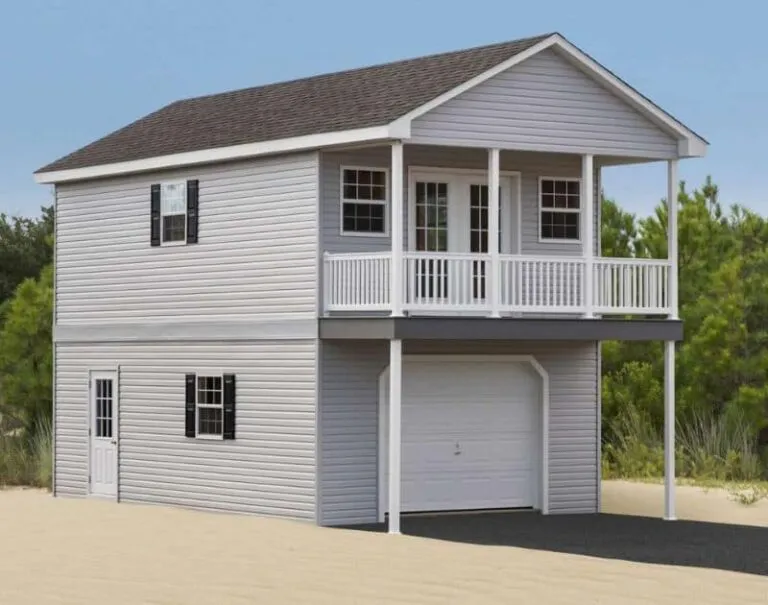
A common one-car garage size is 12×20. This is enough for many cars, but it does not leave much room for storage or extra movement around the vehicle.
For most homeowners, a 14×22 garage is a more comfortable single-car size. The extra width makes it easier to open doors, and the added depth helps with crossovers, longer sedans, and small SUVs.
If you want storage along one side, consider a 14×24 garage or a 1.5-car garage. A 1.5-car garage is usually 16-18 feet wide. It gives you room for one vehicle plus a storage area, workbench, mower, bikes, or tools.
A standard single-car garage door is usually 9 feet wide by 7 feet tall. If your vehicle is taller, lifted, or has a roof rack, a 9×8 garage door may be a better choice.
Two-Car Garage Sizes
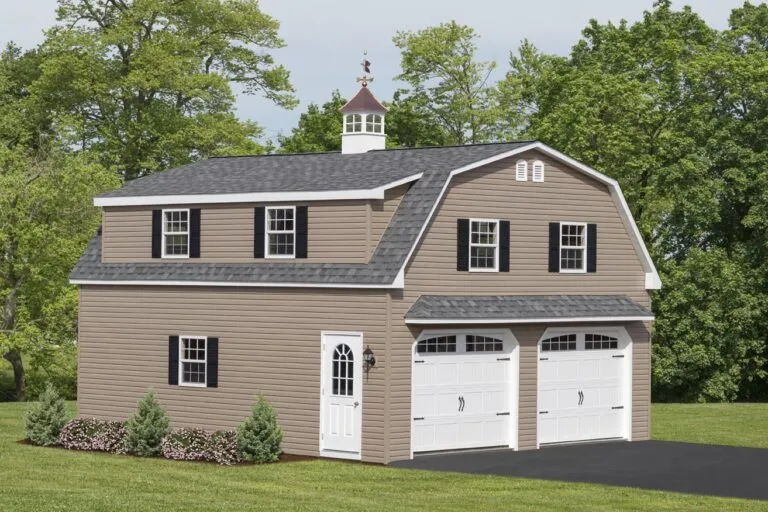
The smallest common two-car garage size is 20×20. It can fit two compact cars, but the space will be tight. There may not be much room to open doors comfortably, and storage space will be limited.
A 22×22 garage gives you more room and can work well for two standard sedans. If you drive SUVs, trucks, or want usable storage space, a 24×24 garage is often a better choice.
Here is a simple way to compare common two-car garage dimensions:
20×20
Best for two compact cars when space or budget is limited.
22×22
Works for many sedans and gives you a little more room to move around.
24×24
A strong choice for many homeowners. It fits two vehicles more comfortably and still leaves space for storage.
24×30
Better for trucks, full-size SUVs, rear storage, tools, or a workbench.
For garage doors, you can use one 16-foot-wide double door or two separate 9-foot-wide doors. A double door gives one wide opening. Two separate doors can be helpful if you want to open only one side at a time.
Three-Car Garage Sizes
A common 3 car garage size is 32×22. This can work, but each bay will be a little narrow once the full width is divided between three vehicles.
For many homeowners, 36×24 is a more practical three-car garage size. It gives each bay about 12 feet of width and provides more depth for larger vehicles.
If one bay will be used for storage, a workshop, a motorcycle, lawn equipment, or a golf cart, you may want to consider a deeper layout, such as 36×28. Planning for that extra space before the garage is built is usually easier than wishing you had added it later.
The standard door setup for a three-car garage is three 9-foot-wide garage doors. Some homeowners use an 8-foot door for a smaller third bay, but a 9-foot door gives more flexibility for future use.
Four-Car Garage Sizes
A four-car garage is usually built for larger households, car collectors, contractors, or homeowners who want both parking and shop space.
A common starting size is 40×20 with four single garage doors. This gives you room for four vehicles, but depth can still be limited. A 40×24 garage is often more useful because it gives you more space behind the vehicles for walking, tools, shelves, or storage.
If your lot is narrow, a tandem garage may be a better fit. A 24×40 tandem layout gives you two double-deep bays instead of four doors across the front. This works well when daily vehicles can park in front and seasonal vehicles, equipment, or project cars can sit in the back.
Standard Garage Depth
Standard garage depth is often listed as 20 feet. That works for many compact cars and sedans, but it can be tight for larger vehicles.
A full-size SUV may be close to 18 feet long. Some full-size pickups can be 19 to 21 feet long, depending on the cab and bed. Once you add clearance in front and behind the vehicle, a 20-foot-deep garage may not be enough.
Here are common garage depth recommendations:
| Vehicle Type | Recommended Garage Depth |
| Compact and mid-size cars | 20 ft. |
| Full-size SUVs and crossovers | 22-24 ft. |
| Full-size trucks and vans | 24-26 ft. |
| Truck plus rear workspace | 28-30 ft. |
If you plan to use the back of the garage for a workbench, tool storage, or shelves, add at least 4 feet beyond the length of your longest vehicle.
Garage Height
Standard garage height is usually 8 to 9 feet from floor to ceiling. A standard garage door is often 7 feet tall.
That works for many cars and SUVs, but not every vehicle. Lifted trucks, full-size vans, roof racks, camper shells, and some work vehicles may need more clearance.
If you have a taller vehicle, consider an 8-foot-tall garage door and 10-foot walls. If you plan to store an RV, high-roof van, or install a vehicle lift, you may need 12 to 14 feet of clearance.
Garage height is difficult to change later, so it is worth thinking about future vehicles and storage needs before the garage is built.
Standard Garage Door Sizes
Garage door size matters just as much as the garage footprint. A garage can have enough interior space, but if the door is too narrow or too short, daily use can still be frustrating.
| Garage Type | Door Width | Door Height |
| 1-car standard | 9 ft. | 7 ft. |
| 1-car tall vehicle | 9 ft. | 8 ft. |
| 2-car double door | 16 ft. | 7-8 ft. |
| 2-car dual single doors | 9 ft. each | 7-8 ft. |
| 3-car | 9 ft. x 3 | 7-8 ft. |
| RV or oversized | 12-16 ft. | 12-14 ft. |
As a general rule, your garage door should be at least 2 feet wider than your vehicle and at least a few inches taller than the highest point of the vehicle. When measuring height, include roof racks, antennas, lift kits, or any other accessories.
Prefab Garage Prices
Prefab garage prices depend on the size, style, roof design, doors, windows, siding, and other options you choose. The prices below are starting points for our Amish-built prefab garages.
| Garage Type | Starting Price |
| Single-car garage | from $5,915 |
| Double-car garage | from $26,565 |
| Mega / oversized garage | from $24,105 |
| Garage with apartment | from $15,120 |
Prices do not include delivery. For an exact price, request a quote based on your garage size, options, and location.
How to Choose the Right Garage Size
The best garage size depends on three things: your vehicles, your storage needs, and how you plan to use the space.
If the garage is only for parking, you may be able to stay close to the standard garage dimensions. If you want room for tools, bikes, a mower, outdoor equipment, or a workbench, it is usually worth sizing up.
Many homeowners also choose a larger garage because their needs change over time. You may buy a larger vehicle later. You may need more storage. You may want to add a hobby space or small workshop. A little extra room can make the garage more useful for years to come.
Get Help Choosing the Right Garage
Our Amish-built prefab garages are delivered and assembled on your property by our own crew. We build garages for homeowners who need simple parking, extra storage, workshop space, or a larger layout for multiple vehicles.
Not sure which size is right? Tell us what you drive, what you want to store, and how you plan to use the garage. We’ll help you compare options before you commit to a build.
You can also call us at 717-874-8888 and we’ll walk you through the next steps.
Ready to Start Your Project?
"*" indicates required fields